


04-20-2017, 10:53 AM
Very interesting for sure Jan. I live in the same agricultural area that Mike B. is from. Scythes are common here but mainly relegated to hanging on shop walls as decorations now. I own several and have noticed the peculiar marks left on the edges of some of the older pieces. I always assumed that the marks were simply left over from the blacksmithing process but now I believe they may have been created out of the sharpening process.
The scythes used here were the earliest means of harvesting wheat, particularly wheat that was to be saved as seed for the next crop though mechanization quickly made them obsolete even for that purpose. The wheat was laid down and then bundled. Early on the bundles were rolled over with horse drawn threshing stones to separate the head from the stock and then extract the wheat from the head. All these were soon replaced by threshing machines. "Pitching bundles" (into a threshing machine) is a term familiar to anyone over the age of sixty here.
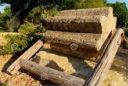
Here's a little trivia for you. Mike and I both got our undergrads at a small college here. The school nickname is the "Threshers". Here's a picture of the threshing stone that sits on the school campus today and when we attended.
The scythes used here were the earliest means of harvesting wheat, particularly wheat that was to be saved as seed for the next crop though mechanization quickly made them obsolete even for that purpose. The wheat was laid down and then bundled. Early on the bundles were rolled over with horse drawn threshing stones to separate the head from the stock and then extract the wheat from the head. All these were soon replaced by threshing machines. "Pitching bundles" (into a threshing machine) is a term familiar to anyone over the age of sixty here.
Here's a little trivia for you. Mike and I both got our undergrads at a small college here. The school nickname is the "Threshers". Here's a picture of the threshing stone that sits on the school campus today and when we attended.