


01-06-2018, 02:12 PM
We're running this up the flagpole here because we're interested in your input so please, input away.
The premise here is that edge rolling is a major contributor to dull edges and edge longevity (retention). Edge overheating during the sharpening process is probably one of these contributing factors that we could all agree on but how much of a problem is it? A little, a lot or a whole lot? If one sharpening methodology seems to indicate a very measurable effect on edge rolling does another methodology effectively mitigate it? Of course there are many other contributing factors that could be tested for as well and we won't try to enumerate them all here but, of course, initial sharpness level, steel hardness and blade geometry come to mind readily.
One thing that we have absolute confidence in here is the ability of our instrumentation to measure the effect of edge rolling. We can't tell you, in inches or degrees, how much the edge has rolled but we can measure its effect on edge sharpness with great certainty. But that what's it's all about for all of us here isn't it? How easy or difficult it is to cut through something.
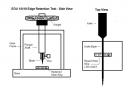
So we propose to build a test apparatus. A test apparatus that will perform one very simple test; how much did an edge roll expressed by it's decrease in sharpness? We propose to measure the sharpness level of a particular location of a prepared edge then lower,very carefully, that edge onto a narrow strip of hardened steel and then measure again to obtain an indication of how much the edge edge rolled as a result of the process. We will be able to add loading (weight) to the process should that prove useful.
So there you have it! It's a simple test stand to build and if you guys think that it could deliver useful information then we'll build it. We'll test the edges we create and we'll test the edges you create if that's how you want it. If you have thoughts, design or otherwise, we'd like to hear them. Please keep in mind that we are testing for only (1) one factor with this test instrument, edge rolling. We do not intend to try to define, with this device, how much better (or worse) a toothy edge slices than a polished edge or any one of a myriad of other questions we'd like to answer.
The premise here is that edge rolling is a major contributor to dull edges and edge longevity (retention). Edge overheating during the sharpening process is probably one of these contributing factors that we could all agree on but how much of a problem is it? A little, a lot or a whole lot? If one sharpening methodology seems to indicate a very measurable effect on edge rolling does another methodology effectively mitigate it? Of course there are many other contributing factors that could be tested for as well and we won't try to enumerate them all here but, of course, initial sharpness level, steel hardness and blade geometry come to mind readily.
One thing that we have absolute confidence in here is the ability of our instrumentation to measure the effect of edge rolling. We can't tell you, in inches or degrees, how much the edge has rolled but we can measure its effect on edge sharpness with great certainty. But that what's it's all about for all of us here isn't it? How easy or difficult it is to cut through something.
So we propose to build a test apparatus. A test apparatus that will perform one very simple test; how much did an edge roll expressed by it's decrease in sharpness? We propose to measure the sharpness level of a particular location of a prepared edge then lower,very carefully, that edge onto a narrow strip of hardened steel and then measure again to obtain an indication of how much the edge edge rolled as a result of the process. We will be able to add loading (weight) to the process should that prove useful.
So there you have it! It's a simple test stand to build and if you guys think that it could deliver useful information then we'll build it. We'll test the edges we create and we'll test the edges you create if that's how you want it. If you have thoughts, design or otherwise, we'd like to hear them. Please keep in mind that we are testing for only (1) one factor with this test instrument, edge rolling. We do not intend to try to define, with this device, how much better (or worse) a toothy edge slices than a polished edge or any one of a myriad of other questions we'd like to answer.